
When Code Drives Cargo, Governance Must Catch Up

A recent CleanTechnica article argued that autonomous logistics is scaling rapidly in China. That is true, but the bigger point is this: China is no longer simply testing robotic delivery. Reports from official and local sources indicate that unmanned delivery vehicles are now part of routine logistics operations in many Chinese cities. If containerisation standardised the box and the port, autonomous logistics may standardise movement itself by linking vehicles, depots, roads, data and decisions into one software-directed flow.
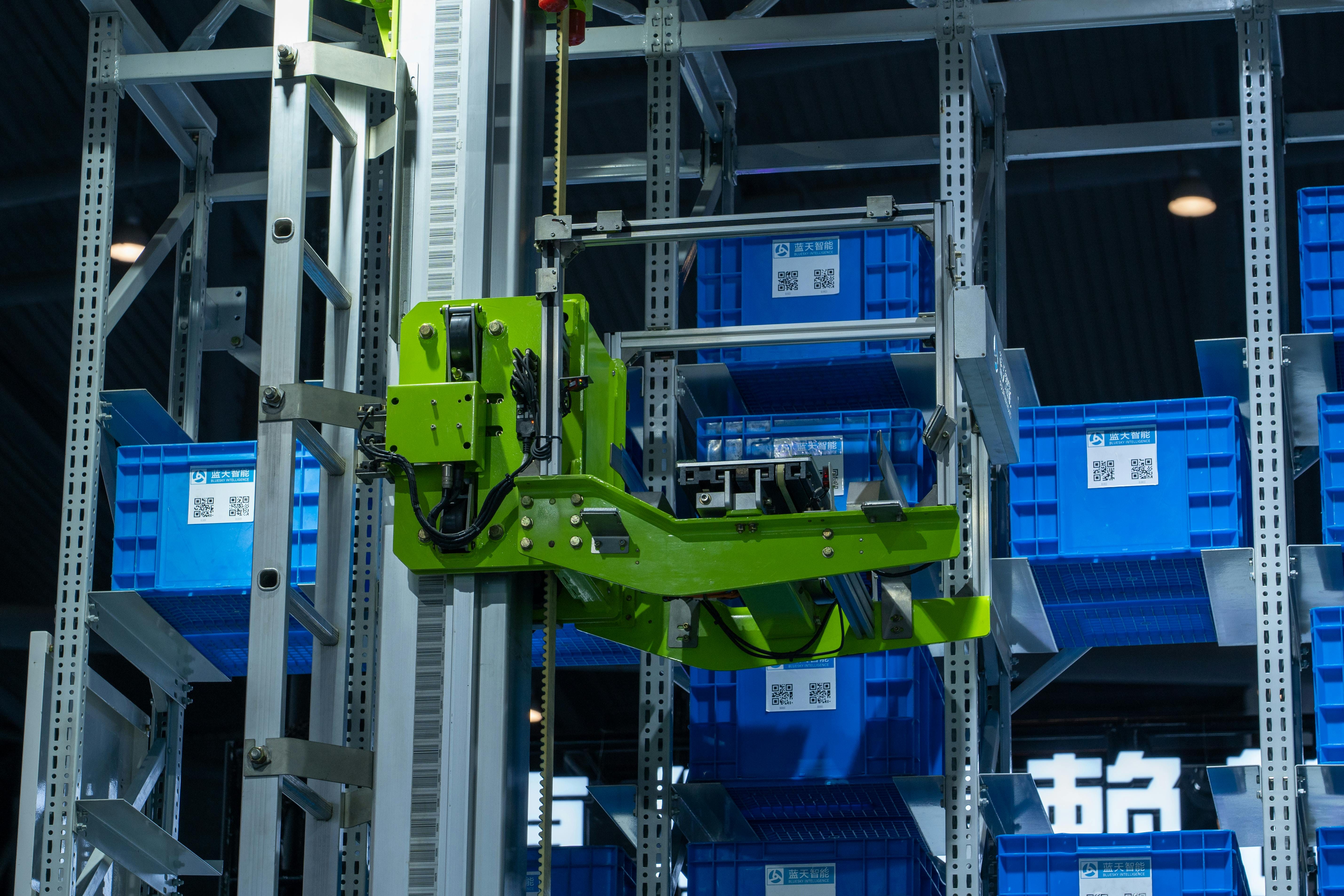
Photo: Peter Xie
The historical parallel matters. Containerisation did not just lower shipping costs; it reshaped trade, labour and industrial power. Autonomous logistics may do something similar inside national economies. By the end of 2024, more than 6,000 unmanned delivery vehicles were operating at scale across China, handling hundreds of millions of orders in more than 100 cities and across over 100 use cases. In Shenzhen alone, 432 unmanned vehicles completed 1.02 million autonomous deliveries in September 2025, generating 8.7 million yuan in revenue and covering roughly 200,000 kilometres. This is not merely experimentation. It is the early shape of infrastructure.
The broader market reinforces the point. Analysts estimate that China’s autonomous delivery industry generated approximately 10.5 billion yuan in revenue in 2024, up about 61.5 percent year-on-year. China’s express delivery system handled close to 200 billion parcels in 2025, and official reporting says the country has accounted for more than 60 percent of global growth in parcel volumes in recent years. At the same time, autonomy is moving beyond the last mile. ZTO Express has taken delivery of 400 autonomous heavy-duty trucks from Inceptio to improve efficiency and reduce costs on trunk routes. A country that leads in parcel volumes is now testing automation on both urban delivery routes and longer freight corridors.
That is why this should be treated less as a technology story than as a governance story. Chinese case studies report that autonomous fleets can lower costs, extend operating hours and improve reliability. At a ZTO industrial park in Shandong, 27 autonomous delivery vehicles operate from early morning to evening, each carrying up to 500 packages per trip. The operator reports that delivery efficiency has risen by about 20 percent while costs have fallen. In Dengkou County, Inner Mongolia, industry accounts describe how unmanned vans increased a courier’s daily capacity from just over 200 parcels to more than 1,000. But the same concentration that enables these gains can also create new vulnerabilities. Guidance on AI in critical infrastructure warns that when routing, dispatching and monitoring are tightly integrated into a small number of software systems, cyberattacks or software failures can have system-wide effects.
That creates a new policy challenge. The old trade-off was efficiency versus resilience. A second question is now emerging: should countries and companies rely on a single, tightly controlled logistics system or on a more open model with multiple providers and safeguards? China’s current approach points toward a highly integrated logistics stack in which physical movement, digital visibility and algorithmic control are closely connected. That may prove highly efficient. But it also raises questions that merit more scrutiny. Who owns the data generated by autonomous fleets? Who checks the algorithms that assign routes, monitor workers and prioritise deliveries? And how much human override remains when systems are designed to maximise uninterrupted machine flow?
These are not arguments against automation. The case is strong. Autonomous fleets can reduce repetitive physical work, improve service reliability and support cleaner urban logistics when combined with electrification. Chinese depots that use unmanned vehicles between sorting centres and community outlets report that staff can spend more time on customer interaction and exception handling when machines handle short-haul shuttling. Studies of automation in warehouses and transport likewise find that performance is highest when people supervise and adjust automated systems rather than compete with them on repetitive tasks. Properly managed, that is real progress.
But properly managed is the key phrase. Operators should treat autonomous fleets as critical infrastructure, not just as equipment purchases. That means keeping manual fallback options, avoiding excessive dependence on a single software or service provider where possible, and testing what happens when automated systems go down. It means redesigning jobs and retraining workers so people supervise and improve automated systems rather than simply being removed from them. It also means applying clear rules to data access, audit trails and decision-making authority for actions that affect safety, continuity or livelihoods.
The broader lesson is both sobering and encouraging. Logistics revolutions often look technical at first. Later, they reveal themselves to be social, political and strategic. Containerisation transformed ports, unions and production networks. Platform commerce reshaped retail, warehousing and urban space. Autonomous logistics is likely to change the hidden systems of everyday economic life in similar ways, especially in countries willing to deploy at scale, as China already has. The question is not whether software will move goods. That is already visible in China’s thousands of unmanned vehicles and millions of automated deliveries. The real question is whether governments and operators will set the rules early enough to make this new system resilient, open and human-centered.
A well written article, but one aspect in these stories of efficiency, cost and otherwise, are the impact on the overall economy. That companies reduced cost and improve their profitability is a given in this co text, but what about the socio economic impact this efficiency improvements have?
The integration of autonomous vehicles (AVs) and AI into cargo transport can, and most likely will, presents a major socio-economic challenge.
It promises massive cost reductions, improved supply chain efficiency, and consumer savings, but creates severe challenges regarding job displacement, labor market polarization, and shifting infrastructural needs that require targeted policy intervention.
My point is, that looking at this from one angle only is not desirable, one have to take multiple angles into the calculation. Because what is good at one area in many cases causes issues in a totally different area.
Within supply chain and logistics we are always asked to consider the bigger picture and more holistic view so to say.
Looking at things holistically means prioritizing complete systems over isolated parts. By examining the greater context of an issue, you prevent tunnel vision and better understand how interconnected factors interact to impact the whole.